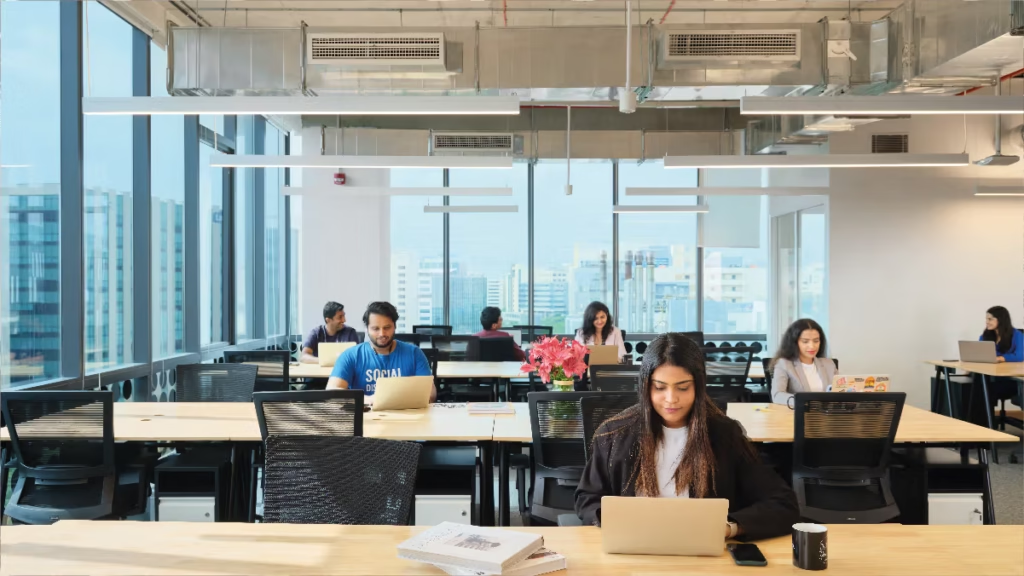
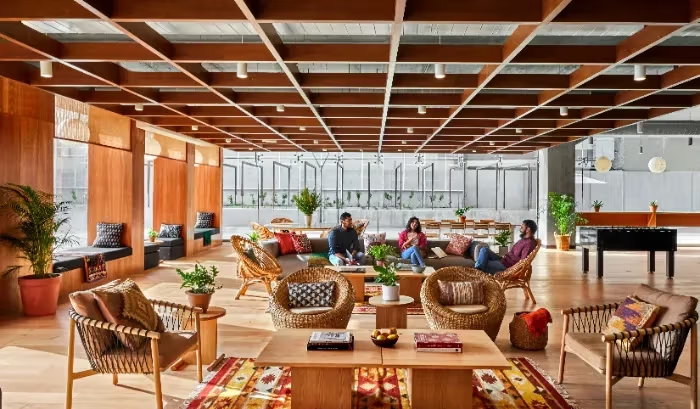
Productivity is not only about skills, tools, or management styles. The physical environment where people work plays a direct role in how efficiently teams perform. Poor layouts, constant distractions, and uncomfortable setups reduce focus and increase fatigue. On the other hand, a well-designed workspace supports concentration, collaboration, and consistent output.
Modern businesses are increasingly recognizing that the right workspace is a strategic decision, not just a real estate choice. Reality Workspaces addresses this shift by offering flexible, fully furnished office environments designed to support productivity and performance for teams of all sizes.
This blog explores how workspace design influences productivity and why flexible office solutions are becoming the preferred choice for modern businesses.
Why Workspace Design Matters More Than Ever
As work models evolve, employees spend less time commuting and more time engaging in focused, outcome-driven tasks. In this context, the quality of the workspace becomes critical.
As work models evolve, employees spend less time commuting and more time engaging in focused, outcome-driven tasks. In this context, the quality of the workspace becomes critical.
Common issues in poorly designed offices include:
- Noise and constant interruptions
- Lack of privacy for focused work
- Insufficient meeting areas
- Overcrowding or unused space
These problems affect employee performance and overall business efficiency. A thoughtfully designed workspace solves these challenges by aligning the environment with how teams actually work.
The Link Between Workspace and Productivity
Research and real-world experience show a clear connection between workspace quality and employee output.
A productive workspace:
- Reduces distractions
- Improves focus and mental clarity
- Encourages collaboration when needed
- Supports long working hours without fatigue
Reality Workspaces designs offices that balance individual focus with team interaction, ensuring that productivity is not compromised.
Private Cabins for Deep Focus and Confidential Work
Some tasks require uninterrupted concentration and privacy. Open offices often fail in this area.
Private cabins offer:
- Enclosed, distraction-free environments
- Confidential settings for sensitive discussions
- Better focus for leadership and core teams
At Reality Workspaces, private cabins are ideal for teams that need structure while still benefiting from shared office facilities.
Dedicated Desks That Support Consistency
Consistency plays a role in productivity. Dedicated desks provide employees with a fixed workspace where they can organize their tools and routines.
Benefits include:
- Reduced setup time each day
- Better organization
- A sense of ownership and comfort
Dedicated desks work well for remote employees, consultants, and small teams who need a reliable office presence.
Coworking Zones That Encourage Collaboration
Collaboration is essential, but it should happen intentionally—not as constant interruption.
Open coworking zones are designed for:
- Team discussions
- Creative brainstorming
- Informal collaboration
Reality Workspaces creates coworking areas that encourage interaction without overwhelming users who need focus.
Meeting Rooms Designed for Productive Discussions
Meetings often fail because the environment does not support clear communication.
Well-equipped meeting rooms:
- Improve discussion quality
- Support presentations and planning
- Help teams make decisions faster
Reality Workspaces offers professional meeting rooms that allow teams to collaborate effectively without disrupting others.
Flexibility as a Productivity Advantage
Rigid office setups force teams to adapt to space limitations. Flexible offices adapt to teams instead.
Flexible workspace benefits include:
- Easy expansion as teams grow
- Ability to reconfigure space based on projects
- Reduced downtime during transitions
This flexibility ensures that productivity remains stable even as business needs change.
Reducing Operational Stress Improves Focus
Office management tasks distract leadership and teams from core work.
Flexible workspaces remove the burden of:
- Maintenance coordination
- Utility management
- Facility issues
By handling these aspects, Reality Workspaces allows businesses to focus entirely on execution and results.
Supporting Hybrid and Modern Work Models
Hybrid work requires offices that are used efficiently, not constantly.
Flexible offices support hybrid teams by offering:
- On-demand workspaces
- Professional meeting areas
- A structured environment without daily attendance pressure
This helps businesses maintain productivity while offering flexibility to employees.
Employee Experience and Retention
Work environment affects how employees feel about their jobs. A comfortable, professional workspace improves satisfaction and reduces burnout.
Positive workspace experiences lead to:
- Higher engagement
- Better morale
- Lower turnover
Reality Workspaces designs offices that support both performance and well-being.
Choosing a Workspace That Aligns With Business Goals
Businesses should evaluate workspaces based on:
- Type of work performed
- Team size and growth plans
- Need for privacy and collaboration
- Long-term flexibility
The right workspace should support both current operations and future expansion.
Internal Linking Suggestions
This blog can internally link to:
- “Private Office Cabins” page
- “Dedicated Desks” overview
- “Coworking Spaces” service page
- “Meeting Rooms” booking page
Conclusion: Productivity Starts With the Right Environment
Productivity is not accidental—it is designed. The workspace plays a crucial role in how teams perform, collaborate, and grow.
Reality Workspaces offers flexible, well-designed office environments that support modern work styles and business performance. By choosing a workspace that adapts to real needs, businesses can create conditions where teams consistently deliver their best work.